Preparing a permitting or compliance enquiry
Five short topics on what to gather before you get in touch: how to describe the job, and which records and correspondence to bring.
If your question is digital waste tracking, start with the readiness page, checklist and walkthrough and bring any questions into your enquiry.
A new activity
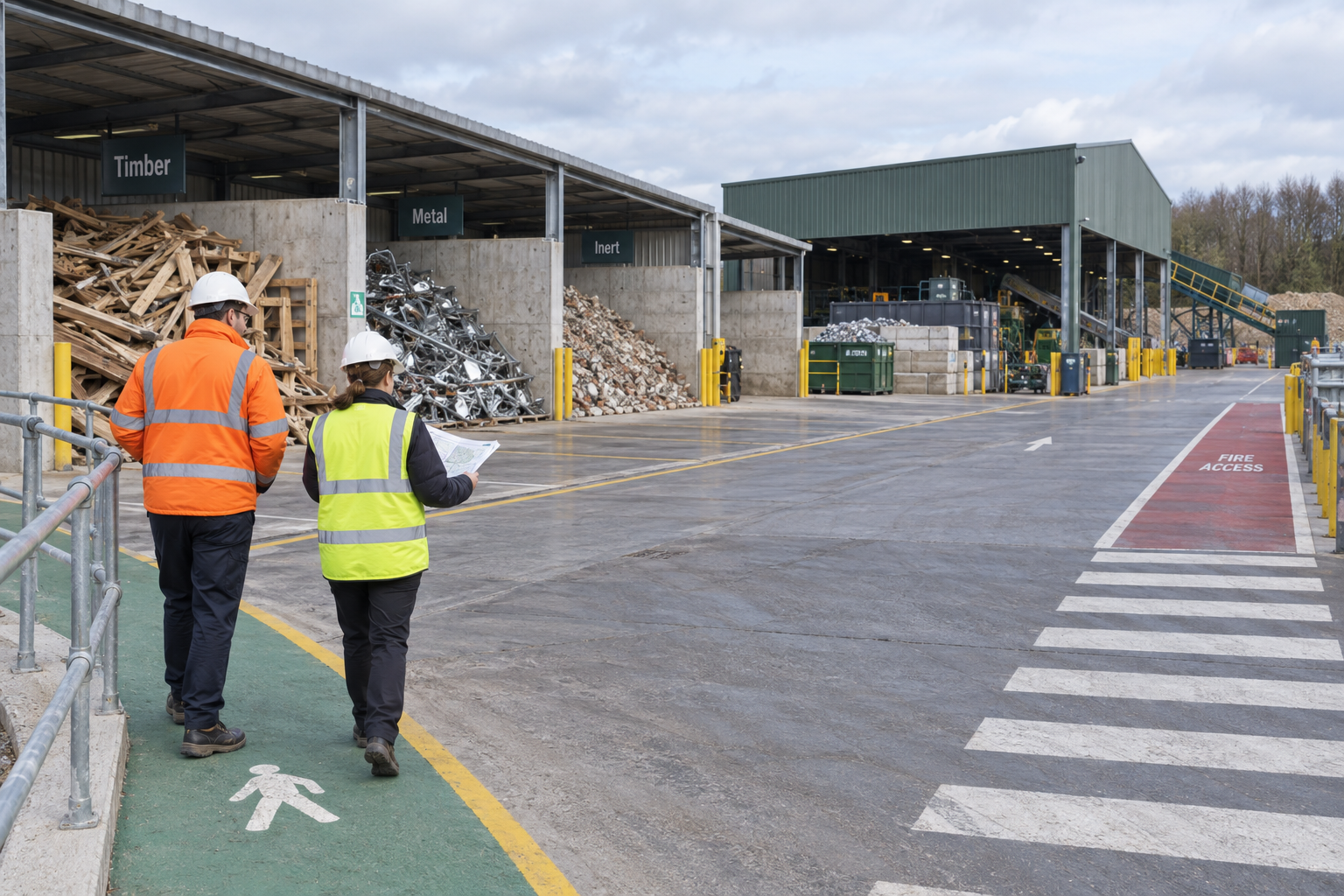
Describe what the site will actually do: the process, the materials in and out, the quantities involved and where on the site it happens. Plain operational language beats regulatory vocabulary here.
Variations
For a change to an existing permit, set out what is changing against what is currently permitted: the activity, the boundary, the quantities or the techniques. The current permit and its conditions are the reference documents, so have the reference number and the latest version to hand.
Records and supporting documents
Applications and reviews both lean on the same set: the permit or registration, management documents, site records and the supporting plans and assessments behind them. Preserve the originals and note corrections separately. Old documents still help, because they show what has changed and what needs bringing up to date.
Correspondence
Recent regulator correspondence often defines the real starting point: what has been asked, what has been promised and what deadlines already exist. Bring it complete rather than summarised, including anything uncomfortable, because the scope has to deal with the position as it stands.
Turning gaps into a scope
Turn what you find into a short list: what needs doing, in what order, and what output you expect. Nothing is submitted until the scope is agreed in writing.
Tell us what has changed and what you need to resolve
Bring the list and note any gaps as questions.