The service brings site information into an agreed evidence and review process with named responsibilities.
01
Site commencement
Establish the environmental baseline and reporting arrangements at commencement.
Baseline condition and surroundings recorded before works advance
What is captured, by whom and how often, agreed in writing
Named recipients and review windows settled at setup
Points to work through
Begin with the site's environmental starting condition and the arrangements already in place. Identify the information the site team holds, the work areas covered and the records needed as the project progresses. Agree the capture list, reporting route, review windows and named recipients at setup. Record any missing information as an open item rather than assuming the baseline is complete.
02
Controlled evidence file
Site reports, photographs and relevant records organised in one controlled file.
Evidence kept together rather than scattered across inboxes
Every entry dated, attributed and traceable
Issues linked to the evidence that raised them, with recipient, response and outcome
Points to work through
Organise reports, photographs and supporting records so that entries can be traced by date, location and author. Link an issue to the evidence that raised it and keep the named recipient, response and outcome with that issue. Agree the file structure and access arrangements at setup, taking account of the records the site team already maintains. The file supports the site record; it does not replace it.
03
Review and escalation
Human review of the evidence, with issues routed to named people within the agreed service arrangements.
Evidence reviewed by people within agreed windows
Issues confirmed and given an owner before they are escalated
Escalations, actions and outcomes recorded so the file shows what happened next
Points to work through
People review the information within the agreed arrangements, check its context and identify anything that needs attention. Where the record is incomplete, the next step may be a request for clarification. Route an issue to the named recipient and record the response. The appointment defines the review responsibilities and how they sit alongside the site team's existing arrangements.
What the record can show
Connect the observation to its surroundings
Which subjects are recorded is agreed for each site and its works.
01
Water and drainage
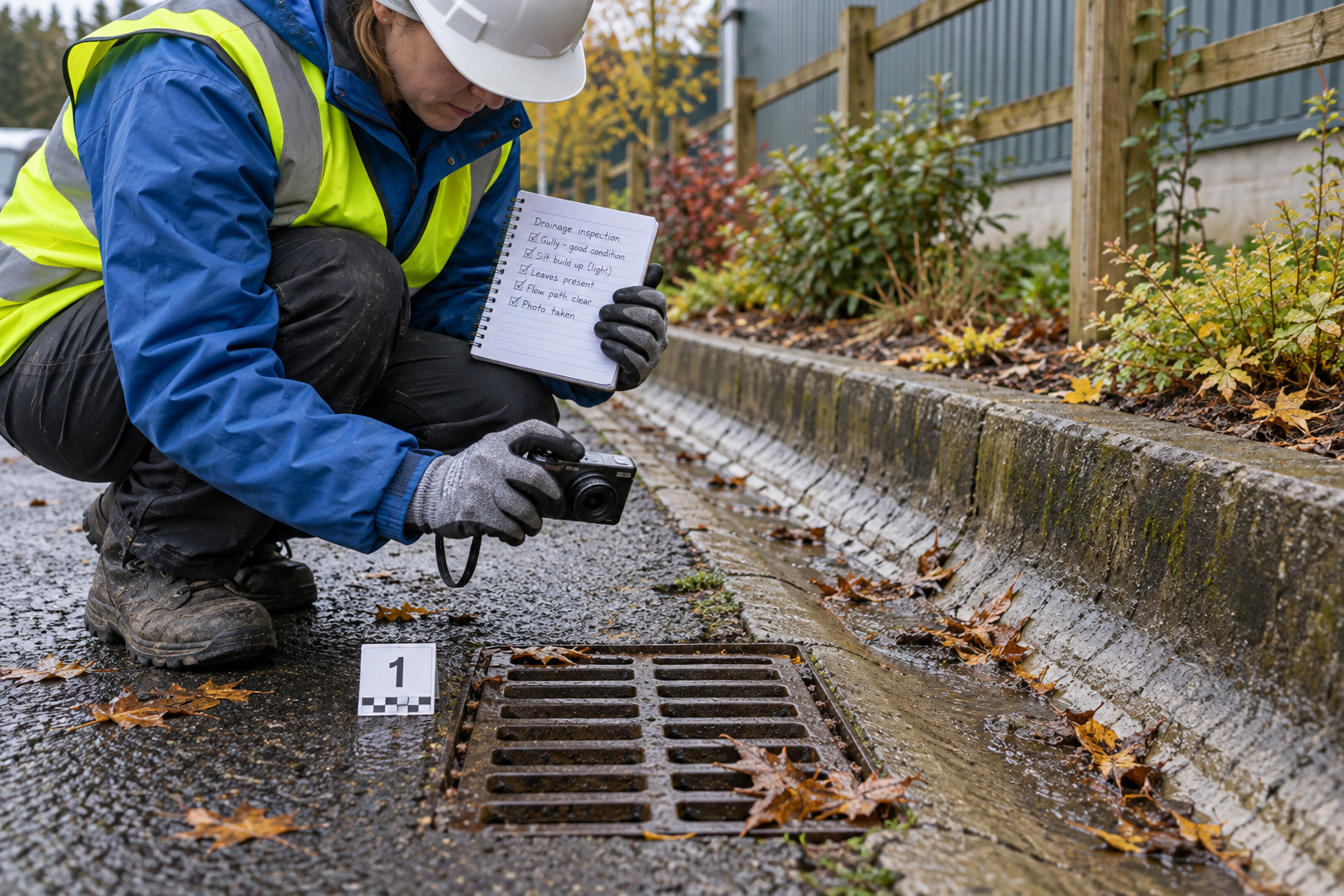
Locate visible drainage features and record the condition observed.
02
Materials and ground
Show where materials are held and give observations a location.
03
Site boundaries
Include neighbouring land and the context beyond the working area.
04
Changes and queries
Record what has changed, the supporting evidence and the person receiving the query.
Questions about the service
Can photographs or views of the site form part of the service?
Where suitable views support the site record, their scope and use are agreed at setup. They form part of the evidence arrangements for the work.
What happens to the evidence file when the project ends?
Handover is agreed in the scope: who receives the file at completion, in what form and under what retention arrangements, so the record outlasts the project team rather than leaving with it.
Does the service include site attendance?
Set out any attendance you want to discuss in the enquiry, including commencement or review points. Attendance, frequency and the work covered need to be agreed as part of the scope.
Can one arrangement cover several sites?
Describe the works and current arrangements for each site. The discussion can then establish whether a shared arrangement fits and which records, responsibilities and recipients need to remain site-specific.
Tell us about the works
Tell us about your existing environmental arrangements and where you need support.